Turnitin Detector Review: What It Actually Flags
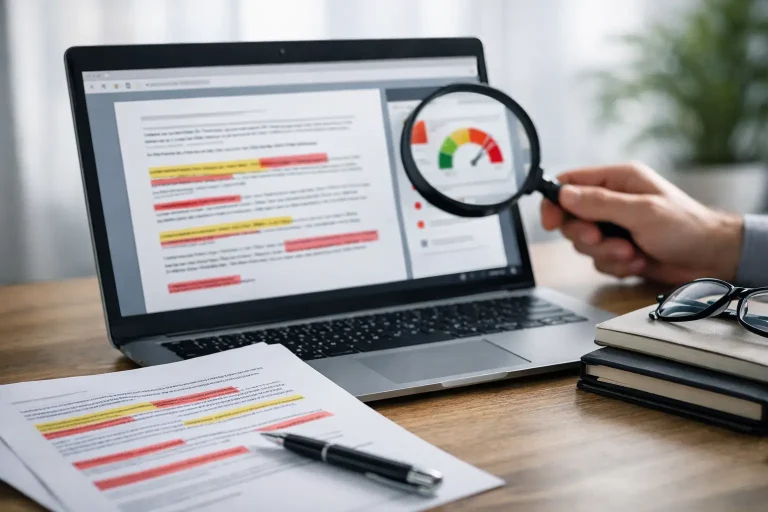
Our Turnitin detector review explains what AI scores mean, where false positives happen, and how to revise AI-assisted work without losing your voice.
Our Turnitin detector review explains what AI scores mean, where false positives happen, and how to revise AI-assisted work without losing your voice.

Turnitin AI detection can flag patterns, not prove authorship. Learn what its score means, why false positives happen, and how to submit stronger work.

Read our GPTZero accuracy review to learn what detection scores measure, where false positives happen, and how to use results fairly in real workflows.

Turnitin versus GPTZero accuracy is not a single score. See how each detector reads text, where false positives arise, and how to use results fairly.

Learn how to edit AI prose for clear structure, credible voice, and accurate detail while preserving the ideas, citations, and keywords that matter most.

Originality AI review for writers and SEO teams: accuracy, false positives, pricing, workflow limits, and how to keep human judgment in the loop daily.

AI rewriter versus human editor: see where automation saves hours, where expertise is nonnegotiable, and how to build a faster, sharper writing workflow.

Use this guide to semantic text restructuring to rebuild AI drafts with clearer logic, natural rhythm, and precise meaning without losing key details.

Learn how to make AI writing sound human without losing meaning, keywords, or citations. Use structure, specificity, and your own judgment with care.

Human editing versus AI rewriting is not a simple speed contest. See where each method preserves meaning, voice, trust, and publish-ready clarity daily.